5 Signs Enterprises Need an Offshore Development Center to Scale Faster


A company needs an Offshore Development Center (ODC) when its product ambition and digital roadmap begin to outpace the engineering capacity of its current operating model. At that point, the challenge is no longer recruitment efficiency, it becomes a structural scaling issue.
Across Southeast Asia, growth-stage and enterprise companies are expanding into new markets, launching digital platforms, and embedding AI into core workflows. However, engineering capacity is not scaling at the same speed. Local hiring cycles are lengthening. Competition for senior engineers is intensifying. Product backlogs are growing.
At this stage, incremental fixes stop working. The question becomes: Is your current engineering structure built for the next phase of growth?
Below are five structural signals that indicate it may be time to establish an Offshore Development Center.
1. Your Product Roadmap Is Expanding Faster Than Your Team Can Deliver
One of the clearest signs you may need an Offshore Development Center is persistent delivery pressure.
Temporary spikes are normal. Persistent imbalance is not.
You may notice:
- Backlogs growing quarter after quarter
- Features postponed despite strategic importance
- Technical debt accumulating
- Release cycles slowing down
When demand consistently exceeds internal engineering bandwidth, short-term hiring or project-based outsourcing rarely addresses the root cause. An Offshore Development Center provides dedicated development capacity aligned with your roadmap, stabilizing immediate delivery pressure while building long-term execution continuity instead of reactive patchwork solutions.


2. Hiring Senior Tech Talent Locally Is Becoming Slower and More Expensive
In markets like Singapore and across Southeast Asia, competition for senior engineers, AI specialists, cloud architects, and DevOps leaders has intensified significantly.
Common symptoms include:
- Extended hiring cycles (3–6 months per role)
- Escalating salary expectations
- High attrition risk in competitive sectors
- Offer declines due to competing compensation packages
When recruitment timelines expand, innovation velocity slows by default. An Offshore Development Center expands access to regional talent pools while maintaining governance alignment, security standards, and technical oversight. This is not about lowering hiring standards, it is about broadening capacity intelligently to sustain growth momentum.
3. Technology Has Become Core to Your Competitive Advantage
If technology directly drives revenue, customer experience, or operational differentiation, engineering can no longer function as a transactional support unit.
This is especially true for companies developing:
- SaaS platforms
- AI-enabled systems
- Cloud-native infrastructure
- Enterprise digital ecosystems
In these cases, isolated project delivery is not enough. Sustainable growth requires continuity of knowledge, stable architectural ownership, and deep system familiarity that strengthens over time.
An Offshore Development Center embeds engineering capability directly into the operating structure, allowing institutional knowledge to compound rather than reset with each new engagement.
4. Coordination Overhead Is Increasing
Another structural signal is rising coordination friction. Leadership may notice increasing time spent on alignment rather than execution.
Typical patterns include:
- Re-clarifying requirements across multiple vendors
- Re-explaining product context repeatedly
- Managing fragmented development streams
- Recovering lost knowledge after project transitions
When coordination costs increase, productivity declines, even if individual contributors are strong. Traditional outsourcing models often separate strategy from execution.
An Offshore Development Center reduces this gap by integrating offshore teams into sprint planning, roadmap discussions, and shared KPI frameworks. Over time, this alignment reduces rework, improves predictability, and strengthens delivery confidence.
5. You Need Scalable Engineering Capacity, Not Just Cost Reduction
Many organizations initially explore offshore strategies for cost reasons. However, cost savings alone do not create competitive advantage.
The real question is scalability.
Ask yourself:
- Can your current model support 2x product complexity?
- Can you launch multiple parallel initiatives without delivery breakdown?
- Can your engineering capacity scale with market expansion?
An Offshore Development Center is not designed to optimize short-term expenditure. It is designed to optimize long-term capability scalability. As domain knowledge deepens and retention stabilizes, productivity compounds, and effective cost per output decreases over time.
What an Offshore Development Center Actually Solves
An Offshore Development Center becomes strategically appropriate when:
- Digital growth consistently outpaces internal engineering capacity
- Local hiring constraints limit innovation speed
- Technology is central to competitive positioning
- Long-term continuity and governance alignment are required
- Scalable delivery infrastructure is essential
An ODC is not a tactical hiring shortcut. It is a structural extension of your engineering operating model, designed to support sustained innovation and predictable execution.
Offshore Development Center vs Fragmented Solutions
Organizations often attempt incremental adjustments before considering structural change, such as:
- Hiring contractors
- Extending vendor contracts
- Splitting work across multiple outsourcing partners
These approaches may relieve pressure temporarily, but they rarely create strategic continuity or scalable capability.
An Offshore Development Center is different. It can support both immediate execution needs and long-term scaling because it:
- Establishes dedicated teams
- Aligns KPIs with business outcomes
- Integrates into governance structures
- Builds cumulative domain knowledge over time
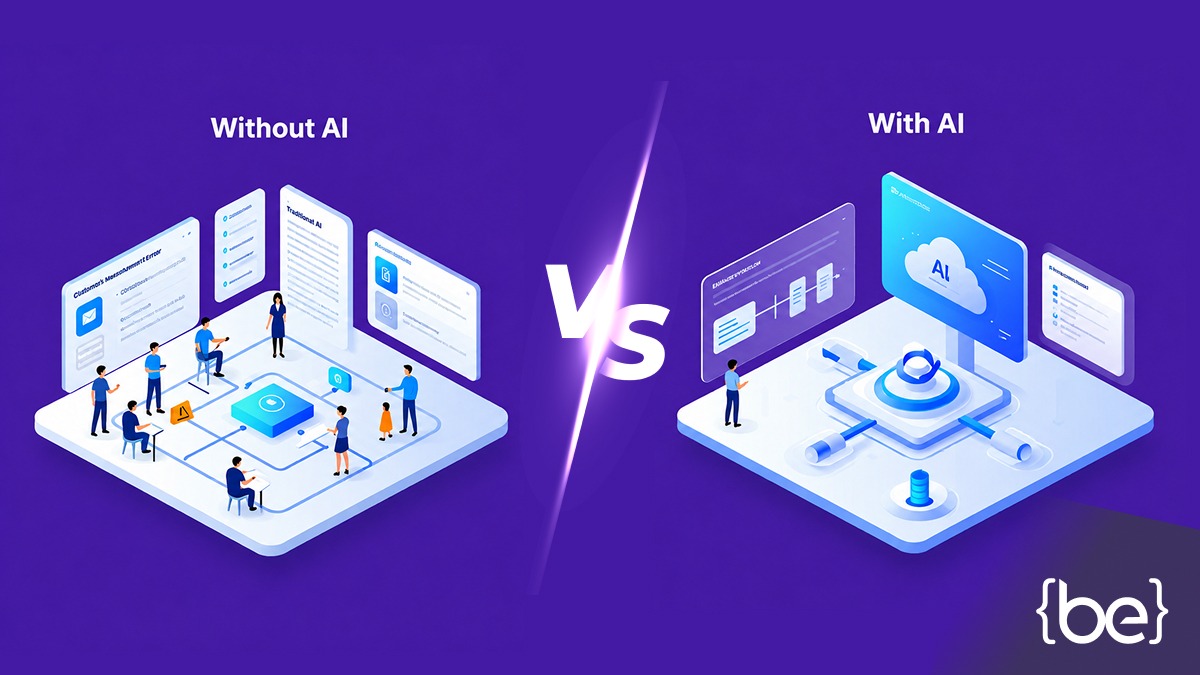
Without structural integration, offshore capability remains transactional.
With integration, it becomes a scalable growth engine, delivering short-term output while compounding long-term value.
The BeyondEdge Approach
At BeyondEdge, we see Offshore Development Center adoption as an evolution of the operating model rather than a staffing tactic. The most successful ODCs are not built around cost arbitrage. They are designed around governance clarity, capability depth, and long-term alignment with business strategy.
When structured correctly, an Offshore Development Center does more than expand headcount. It accelerates innovation cycles, strengthens technical resilience, and creates predictable delivery frameworks that scale with business ambition.
Conclusion
An Offshore Development Center becomes necessary when scaling product innovation requires more than incremental hiring adjustments.
If your organization is experiencing sustained delivery pressure, constrained talent access, or expanding technical complexity, it may be time to move from tactical staffing solutions to structural capability building.
Because in today’s digital economy, sustainable growth is not driven by ambition alone, it is driven by the architecture that supports it.