The Hidden Trap Of Scaling Your ODC Without AI Powered Operational Efficiency
Scaling software delivery is traditionally viewed through a linear lens: when the roadmap expands, the team must expand with it. For years, the industry operated under the assumption that adding more developers was the most reliable way to accelerate innovation.
However, this model shows its limits.
Scaling through headcount often introduces a “coordination tax”, a rise in communication overhead, fragmented knowledge, and management complexity that eventually negates the intended productivity gains. Today, if your team is constantly busy but your time-to-market continues to lag, you are likely not facing a talent shortage; you are facing a throughput problem.
This is why the conversation around Offshore Development Centers (ODCs) is shifting. In an AI-driven world, the most important question is no longer how many engineers a technology partner can provide, but how effectively those engineers can deliver measurable business outcomes.
The Hidden Trap of Traditional ODC Scaling
Adding people to a manual or inefficient delivery process rarely solves the underlying problem. More often, it amplifies existing bottlenecks. Common symptoms include:
- Increased communication and coordination overhead.
- Longer onboarding and knowledge transfer cycles.
- Greater dependency on senior engineers for reviews and guidance.
- More rework is caused by inconsistent standards and fragmented knowledge.
For industries such as logistics and F&B, these inefficiencies can have a direct business impact. A delayed route optimization feature can slow operational improvements across a logistics network. A delayed update to a digital ordering platform can affect customer experience across multiple outlets. When engineering delivery slows down, business growth often slows with it.

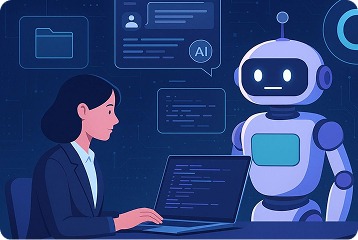
AI Powered ODC Model Is Not Replacing Engineers, It’s Reducing Engineering Waste
One of the biggest misconceptions about AI in software development is that its primary purpose is automation. The real value is efficiency.
AI-powered workflows help engineering teams reduce the manual effort that consumes time but creates little strategic value. Instead of spending hours on repetitive tasks, teams can focus on solving business problems and delivering customer-facing improvements. Areas where AI can improve delivery efficiency include:
- Accelerating requirements analysis and planning.
- Supporting rapid prototyping and validation.
- Streamlining testing and quality assurance.
- Improving documentation and knowledge retention.
- Enhancing project coordination and resource planning.
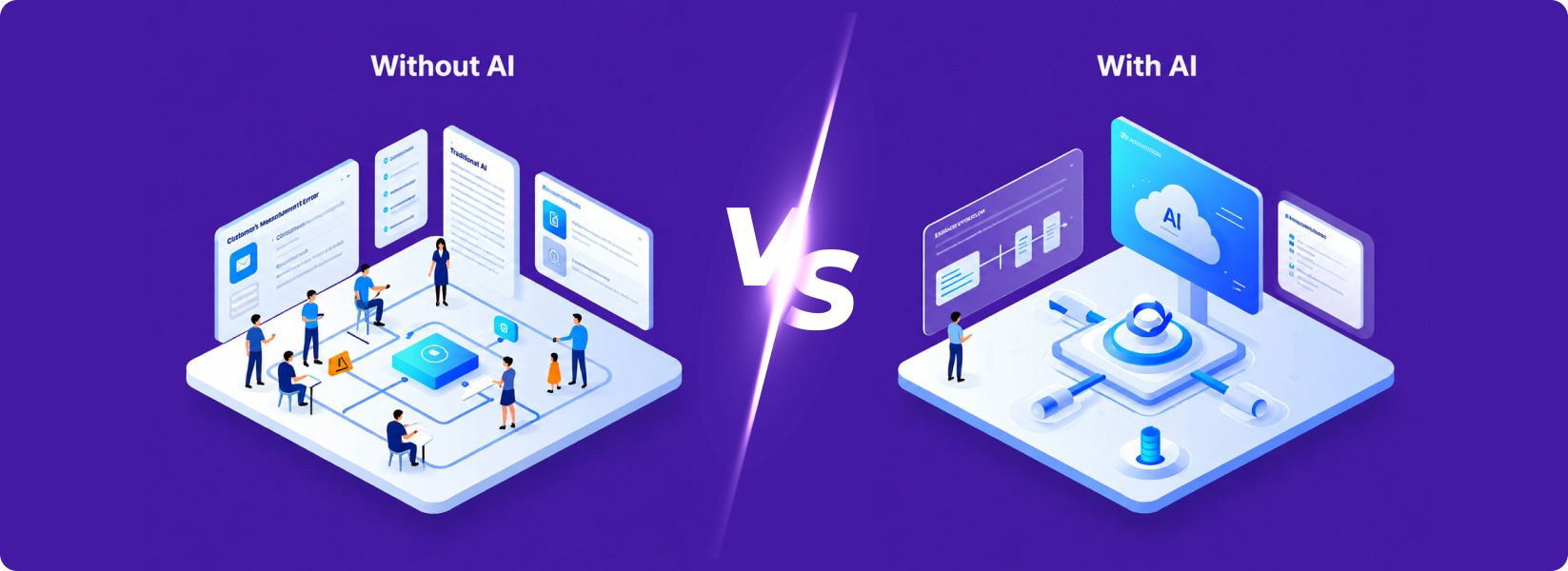
The result is an ODC that scales by increasing productivity per engineer, not by simply adding more seats.
Metrics That Actually Measure Business Impact
If ODC engineering success is still being measured primarily by team size or hourly rates, the wrong metrics drive the conversation. Leading organizations now focus on indicators that reflect the real ROI of an AI-Powered ODC:
- Cycle Time: How quickly can an idea move from planning to production?
- Time-to-Market: How fast can new features reach customers?
- Feature Throughput: How much value can the team deliver within a given period?
- Quality and Reliability: Can systems scale without creating operational risks?
- Resource Efficiency: How effectively are engineering investments being utilized?
These metrics provide a much clearer picture of engineering ROI than headcount alone.
AI Powered ODC Practical Applications
Modern logistics businesses rely on technology to support route optimization, fleet management, warehouse operations, and supply chain visibility. The faster improvements can be delivered, the faster organizations can respond to changing operational demands. AI-assisted workflows help reduce development friction, shorten delivery cycles, and accelerate decision-making, allowing logistics teams to implement improvements more efficiently.
For F&B businesses, growth increasingly depends on digital experiences, from mobile ordering platforms and loyalty programs to inventory and outlet management systems. As businesses expand, maintaining consistency across multiple locations becomes increasingly challenging. AI-powered delivery helps engineering teams streamline testing, deployment, and knowledge sharing, enabling faster feature releases while maintaining operational reliability.
Building AI Capability Without Creating Additional Overhead
One of the biggest challenges organizations face when adopting AI is not the technology itself, but the capability gap required to implement it effectively. Building governance, upskilling teams, and embedding AI into delivery processes often require significant time and investment.
At BeyondEdge, clients can bypass much of this complexity. We have established a dedicated enablement team responsible for continuously strengthening our developers’ AI capabilities through a structured and ongoing methodology.
This ensures AI is seamlessly integrated into day-to-day engineering workflows, helping reduce repetitive effort, accelerate execution, and improve consistency across projects.
As a result, organizations gain immediate access to AI-augmented engineering talent without the operational burden of building internal AI capabilities from scratch. This allows leadership teams to focus on business growth rather than capability building.
Final Perspective
The future of engineering extensions is not about hiring more people or simply adding more teams. It is about execution speed, delivery efficiency, and measurable business outcomes. At BeyondEdge, we believe an ODC should be more than a capacity provider. It should be a productivity partner, one that helps organizations scale technology delivery without scaling complexity.
Because in the AI era, the teams that win won’t be the ones with most people. They’ll be the ones that deliver the most value.
Does your engineering setup act as a growth engine or a bottleneck?
Let’s audit your delivery pipeline together, we’ll show you exactly where AI-powered workflows can eliminate operational waste and accelerate your path to ROI.