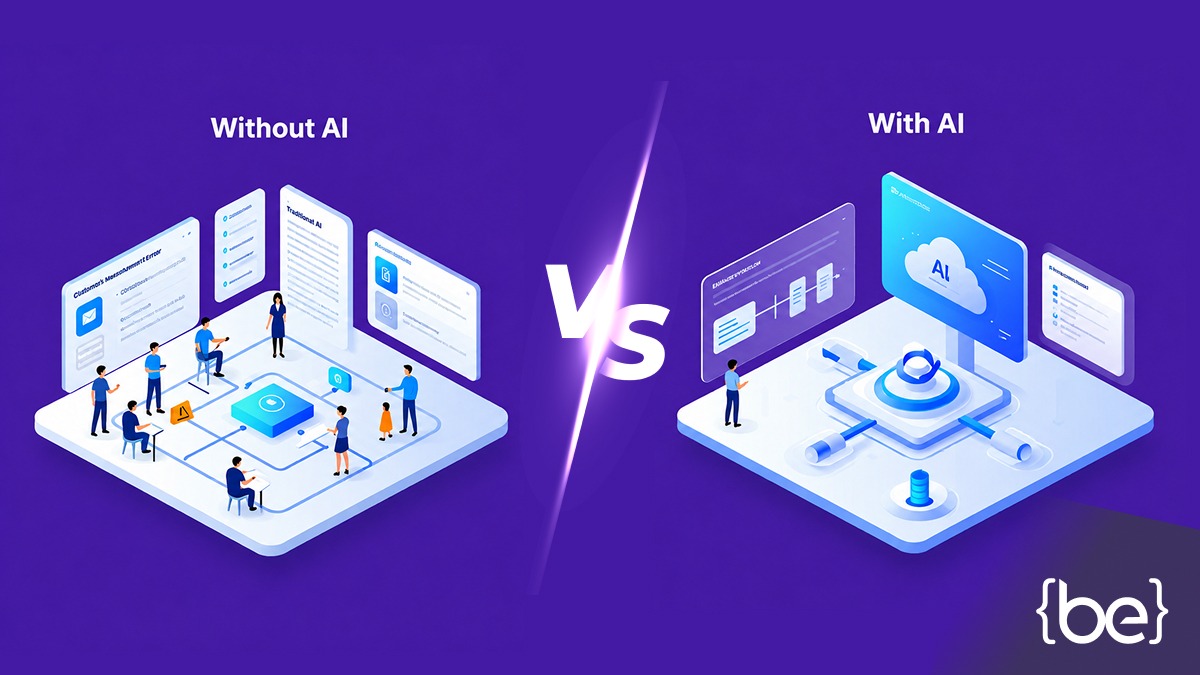
ODC vs In-House Engineering: 30–50% Higher Cost Efficiency at Scale in Offshore Models


Engineering expansion is no longer just a hiring decision. It is increasingly a cost structure and capital allocation decision.
As manpower costs continue rising in Singapore, many companies are reassessing how engineering teams should scale sustainably. According to recent reporting by Yahoo Finance, manpower cost increases remain one of the biggest business concerns following Singapore’s Budget 2026 updates, particularly as qualifying salary thresholds for Employment Pass (EP) and S Pass holders continue rising, adding more long-term cost pressure for technology companies hiring engineering talent.
When companies evaluate ODC vs in-house development cost, salary comparison is often the starting point. However, the bigger financial impact emerges through operational overhead, hiring scalability, and long-term ROI across multiple growth cycles.
Both models require significant investment, but their cost architecture differs fundamentally. Understanding this distinction is becoming increasingly important for CTOs, CFOs, and founders planning sustainable growth in high-cost markets.
Key Takeaways
- Traditional in-house structures become increasingly expensive and slower to scale as teams grow.
- ODC models create more scalable engineering capacity through global talent access and lower structural overhead.
- Long-term ROI depends less on salary comparison and more on how efficiently engineering organizations can sustain growth over time.
Cost Comparison: ODC vs In-House Engineering
| Cost Dimension | In-House Development Team | Offshore Development Center (ODC) |
|---|---|---|
| Base Compensation | High (local market-driven salaries) | Lower due to offshore labor markets |
| Fully Loaded Cost | ~1.3x – 1.6x of base salary | Typically lower total cost per engineer |
| Hiring Cycle Cost | High (recruitment, onboarding delays) | Lower due to centralized offshore hiring |
| Infrastructure Cost | High (office, equipment, utilities...) | Shared or offshore-managed infrastructure |
| HR & Compliance | Fully internalized | Managed by offshore setup structure |
| Scaling Speed | Constrained by local talent availability | Faster ramp-up via offshore talent pools |
| Cost Flexibility | Low (fixed payroll commitments) | Higher (more scalable resource allocation) |
| Long-term Cost Behavior | Increases non-linearly with scale | More linear and predictable growth |
1. Understanding the True Cost of In-House Development
An in-house engineering team involves more than base salary. The fully loaded cost structure typically includes:
- Base compensation and performance bonuses
- Employer taxes and statutory contributions
- Health insurance and retirement benefits
- Recruitment and onboarding expenses
- Office space, equipment, and infrastructure
- HR, payroll, and compliance administration
In high-cost markets, the fully loaded cost per engineer can reach 1.3x to 1.6x the base salary once overhead is included.
From January 2027, the minimum qualifying salary for new EP applicants will increase from SGD 5,600 to SGD 6,000, while financial services roles will rise from SGD 6,200 to SGD 6,600 (Lin Daoyi, 2026). S Pass qualifying salaries will also continue increasing progressively under Singapore’s updated workforce policies.
Beyond compensation growth, companies must also absorb rising compliance costs, infrastructure expenses, recruitment competition, and higher employment qualification thresholds tied to foreign workforce policies.
In-house expansion creates fixed structural commitments. Whether product demand fluctuates or not, payroll and operational expenses remain constant. Scaling from 10 to 25 engineers significantly increases long-term financial liability.
A key structural characteristic of in-house development is cost rigidity under uncertainty. Once headcount is added, cost cannot flex downward in response to demand changes, roadmap shifts, or market slowdown.
This creates a structural imbalance between limited downside flexibility and constrained scaling speed.
2. Understanding Offshore Development Center (ODC) Cost Structure
An Offshore Development Center operates under a different economic model. Instead of internalizing all employment responsibilities, organizations build a dedicated offshore team integrated into their governance framework.
ODC cost components typically include:
- Monthly team fee covering salary and local benefits
- Offshore infrastructure and workspace
- Local HR and compliance management
- Operational and governance alignment
Because offshore markets often have lower employment cost bases, the structural cost per engineer is typically lower than in high-cost domestic markets.
However, the primary financial advantage is not simply lower salary. It is scalable cost architecture.
Unlike in-house structures, ODC models allow engineering capacity to scale more fluidly with demand. This transforms a portion of fixed cost exposure into a more variable, demand-aligned operating model.
For many organizations, this creates 30–50% higher cost efficiency at scale compared to maintaining equivalent engineering growth entirely in-house, particularly across multi-year expansion cycles and high-cost labor markets such as Singapore.


3. Long-Term ROI Depends on Scalability, Not Salary Alone
Many companies evaluate engineering cost primarily through salary comparison.
However, long-term ROI is usually shaped by:
- Hiring speed
- Delivery continuity
- Product release velocity
- Team retention
- Ability to scale under growth pressure
Delayed hiring can slow product launches, increase pressure on internal teams, and reduce overall delivery momentum. In high-growth environments, the cost of delayed scalability often becomes more significant than compensation differences alone.
What Many Companies Eventually Realize
As engineering organizations grow, the key question changes from: “How much does an engineer cost?” to “How efficiently can the organization continue scaling over the next five years?” referable when:
That shift is one of the main reasons many enterprises move beyond purely in-house expansion toward more scalable ODC structures.
Final Perspective
The cost advantage of an Offshore Development Center does not happen automatically. Without governance integration, KPI alignment, and retention continuity, offshore teams can resemble extended outsourcing models that gradually reduce long-term ROI.
At BeyondEdge, Offshore Development Centers are structured as long-term engineering extensions aligned with operational governance, scalable delivery, and sustainable cost efficiency across multiple growth cycles.
Ultimately, the financial comparison between ODC vs in-house development is not simply about salary reduction. It is a strategic decision about scalability, operational resilience, and long-term cost structure.
Organizations that evaluate engineering expansion through a multi-year operational lens, rather than short-term hiring costs alone, are often better positioned for sustainable growth and more predictable expansion.
Explore how BeyondEdge structures scalable ODC teams!